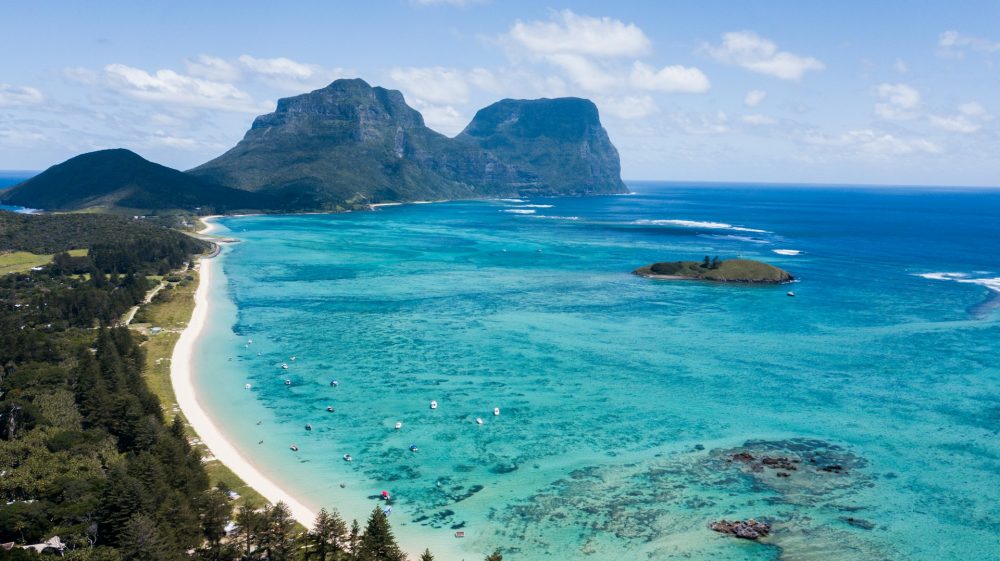

The far outer reaches of Seychelles hold a side of the Indian Ocean that feels distant from everyday travel routes. These islands sit scattered across deep blue water, shaped by wind, coral, and time. Some are barely touched by settlement, yet they support thriving marine life, rare birds, and ancient land species that continue to survive in isolation.
Astove Atoll and nearby islands in the southern group show how fragile and powerful these environments can be at the same time. Giant tortoises move across abandoned plantation grounds, reefs drop into near-bottomless ocean walls, and lagoons shift between calm beauty and sharp coral formations that have guarded these waters for centuries.
Seychelles’ outer islands now sit at the center of global eco-focused travel. Not because of crowds or commercial activity, but because of how little has changed here.
Astove Atoll and the Edge of the Indian Ocean
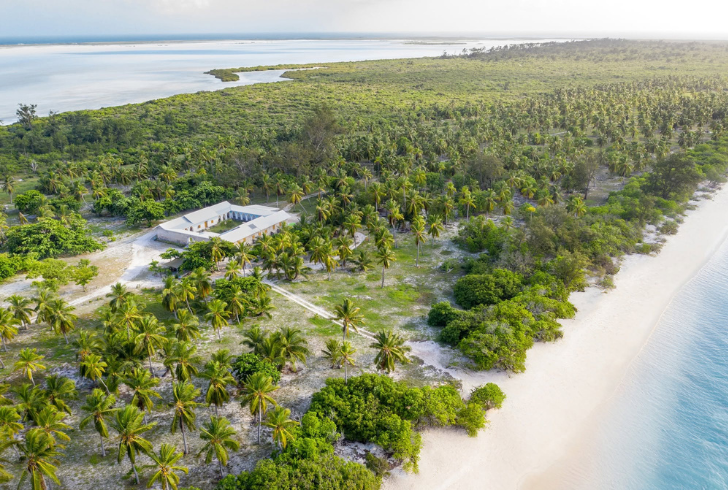
Instagram | bluesafari_collection | Isolated and wild, Astove Atoll is a remote, ring-shaped sanctuary where nature has reclaimed its colonial past.
Astove Atoll stands far from major land routes, closer to Madagascar than to Seychelles’ main island, Mahé. The atoll stretches around a shallow lagoon, forming a thin ring of land surrounded by open ocean. Only a small number of people ever reach it, which has helped preserve its raw condition.
On land, traces of old coconut plantations remain, now overtaken by nature. Giant tortoises roam through open patches, moving slowly under palm shade. Their presence feels almost symbolic of survival in isolation. Hermit crabs scatter across the sand, while fallen coconuts and shells mark the ground like natural debris patterns.
The shoreline carries both calm and danger. Smooth sand flats reflect soft light, but nearby reef structures are jagged and sharp. Fossilized coral, known locally as champignon, can damage both skin and boats. Along the northern edge, a grounded yacht named “Shangri-La” rests without explanation, adding to the atoll’s quiet mystery.
Astove also faces strong seasonal winds from the western Indian Ocean. Historically known as the Sea of Zanj, these waters once challenged ancient trade routes. Today, they still move with force, shaping both the reef and the coastline.
Underwater Worlds and Reef Drop-Offs
Beneath the surface, Astove reveals a steep underwater world. Snorkeling across its reef exposes dense marine life that moves through light and shadow. Schools of fish shift in synchronized patterns, while larger species glide through open water with steady motion.
Species commonly seen include bluestripe snapper and humphead wrasse. The reef system here is home to hundreds of marine species, forming a living corridor of biodiversity. The reef wall drops to depths of nearly 3,000 feet, creating a dramatic underwater edge where sunlight fades into deep blue silence.
Floating above this drop gives a sense of scale that is difficult to match elsewhere. The ocean here feels layered, with life concentrated near the surface and vast unknown space beneath.
Seychelles Geography and Distribution
Seychelles consists of 115 islands spread across the Indian Ocean off East Africa. Despite the large number of islands, human settlement remains concentrated. Around 120,000 people live in the country, and nearly 98 percent reside on the 43 Inner Islands.
These inner islands cover roughly 175 square miles of land. Surrounding them is an ocean territory of more than 529,000 square miles. Beyond this core region lie the Outer Islands, a group of 72 coral atolls and sand cays divided into five clusters.
Astove belongs to the southern group of these outer islands. Its remote position places it far from daily transport routes, with travel requiring multiple connections from Mahé. This distance has helped maintain its natural systems with limited disturbance.
Tourism Growth and Development
Tourism in Seychelles expanded rapidly after the opening of Mahé’s airport in the early 1970s. The sector now plays a major role in the national economy, contributing to one of the highest GDP per capita levels in Africa.
Luxury travel is a strong part of the tourism structure. High-end resorts operate on Mahé and surrounding islands, including properties such as Four Seasons, Anantara, Kempinski, and Cheval Blanc Seychelles, which opened in 2024.
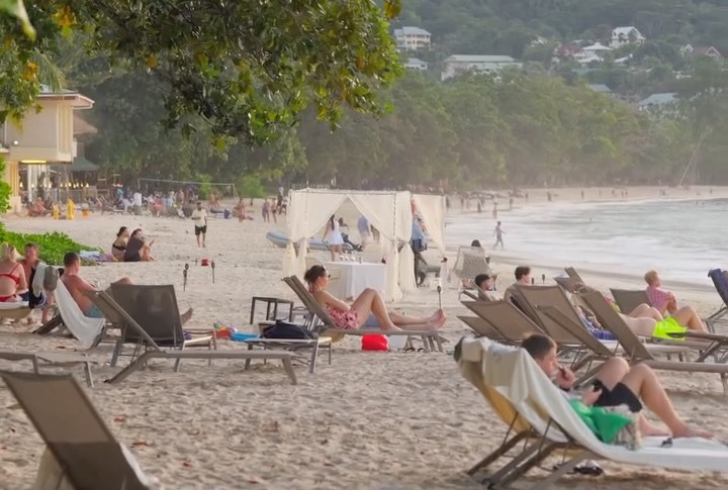
Instagram | visitseychelles | Opening Mahé’s airport ignited a tourism surge that remains the backbone of Seychelles’ wealthy economy.
While the Inner Islands host most development, controlled expansion has reached the Outer Islands as well. A “one island, one resort” approach limits density and aims to balance tourism with conservation. This structure prevents overcrowding and supports long-term environmental protection.
A local perspective shared by taxi driver Gilly Mein reflects cultural change over time: “Eating turtle curry was once part of our culture. Nowadays it would be sacrilege.” This statement reflects how conservation priorities have reshaped traditions.
Conservation Efforts and Protection Policies
Environmental protection has become central to Seychelles’ national identity. In 1994, turtle hunting was banned, leading to a strong recovery of green turtle populations. Aldabra Atoll now hosts one of the largest breeding groups of green turtles in the western Indian Ocean.
In 2018, Seychelles introduced a Blue Bond initiative, raising $15 million to restructure national debt while committing to protect 30 percent of its marine territory. This equals roughly 162,000 square miles of ocean protection.
The Aldabra Group, which includes Astove, now supports major ecological recovery. Aldabra itself is recognized as a UNESCO World Heritage Site and is home to more than 150,000 giant tortoises.
A well-known description often used by field experts calls Seychelles “the Indian Ocean’s Galápagos,” highlighting its rare combination of isolation and biodiversity.
Alphonse Island and Sustainable Systems
Alphonse Island represents a structured approach to low-impact living in the Outer Islands. Located southwest of Mahé, it serves as a base for marine exploration and ecological research.
A solar-supported system powers much of the island’s infrastructure. Water systems include desalination, rainwater collection, and recycling processes. Waste treatment and resource reuse form part of daily operations.
A large farm system produces vegetables such as tomatoes, squash, and leafy greens. Crops reach around four tons per month, supplying a major share of plant-based food across related island operations. Bees, compost systems, and crop rotation support the agricultural cycle.
A significant portion of fish sourcing avoids reef harvesting and instead relies on open ocean catch methods. Conservation groups also monitor marine populations, including sharks and manta rays. Tagging programs have recorded lemon sharks, gray reef sharks, silvertip sharks, and bull sharks, contributing to long-term species tracking.
Marine Life Across Cosmoledo
Cosmoledo Atoll sits as one of the most biologically active zones in the region. Its lagoon spans a large area compared to the narrow ring of land that surrounds it. The waters support a dense range of marine species, from small reef fish to large pelagic predators.
Diving in this area reveals schools of juvenile snappers, batfish, and groupers of various sizes. Hawksbill turtles move through shallow zones, leaving visible trails in the sand. Coral formations vary in color and texture, forming layered underwater structures.
Birdlife also dominates the islands. Species such as red-footed boobies, masked boobies, and brown boobies nest in large colonies. Frigate birds, noddies, and sooty terns add to the dense bird population. Some trees appear filled entirely with nesting birds, creating constant motion and sound.
A field observation often shared by guides notes, “It doesn’t get much wilder than this,” highlighting the intensity of wildlife activity in the region.
Sharks, Rays, and Open Ocean Encounters
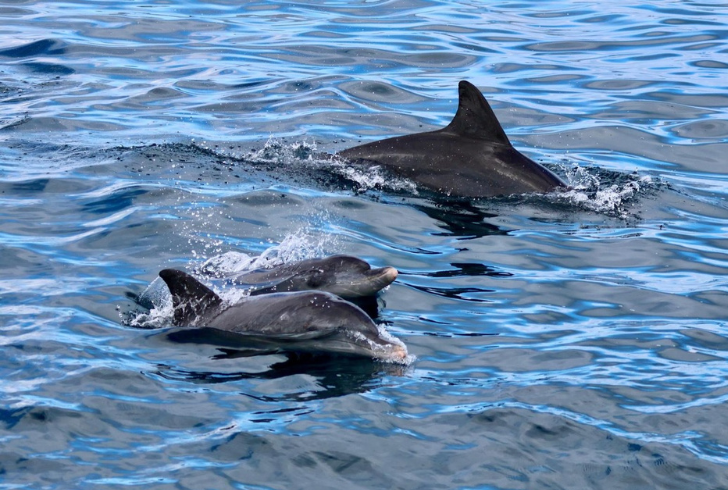
Instagram | universityofseychelles | The outer islands are a thriving biodiversity hub for dolphins, sharks, and giant manta rays.
Outer island waters support frequent sightings of marine megafauna. Spinner dolphins often travel in large groups, sometimes numbering over fifty, moving alongside boats in coordinated motion.
Shark populations remain active in surrounding channels. Sightings can occur unexpectedly during dives, according to marine guides who work in the region.
Manta rays are also present in key lagoon areas, including St. François near Alphonse Island. Some individuals reach spans of up to 13 feet. These rays move slowly and often approach divers at close range, circling before disappearing into deeper water.
In addition, research zones have been identified as important shark and ray habitats, supporting conservation planning for species that face global population decline.
Ocean Life and Conservation Balance
The Outer Islands of Seychelles reflect a rare combination of ecological protection and limited human impact. Reef systems, lagoon habitats, seabird colonies, and terrestrial species continue to exist in a tightly balanced environment.
From giant tortoises on remote atolls to manta rays moving through deep channels, each ecosystem connects through the surrounding ocean. Conservation programs, regulated tourism, and marine protection policies have helped maintain this balance while allowing limited access for research and eco-focused travel.
These islands continue to function as living natural systems, shaped more by wind, water, and wildlife than by human activity.
The outer islands of Seychelles stand apart as one of the few remaining regions where land and ocean still operate with minimal disruption. Astove, Cosmoledo, Aldabra, and surrounding atolls form a network of ecosystems that support rare species, large marine populations, and ancient land creatures.
Strict conservation measures, controlled tourism models, and large-scale marine protection efforts have played a direct role in preserving this environment. What remains is a region where nature continues its cycles with limited interference, offering a clear view into how ocean ecosystems function when given space to persist.
Seychelles’ outer islands hold a quiet strength, shaped by isolation and sustained by careful protection.